In the late eighteenth century, a modest fishing cottage on the banks of Dagenham Lake became the unlikely venue for one of the most exclusive political gatherings in British history. For several decades, the entire Cabinet of the United Kingdom travelled down the Thames to dine in Dagenham, establishing a tradition that became an obligatory ritual of government.
Origins at Dagenham Lake
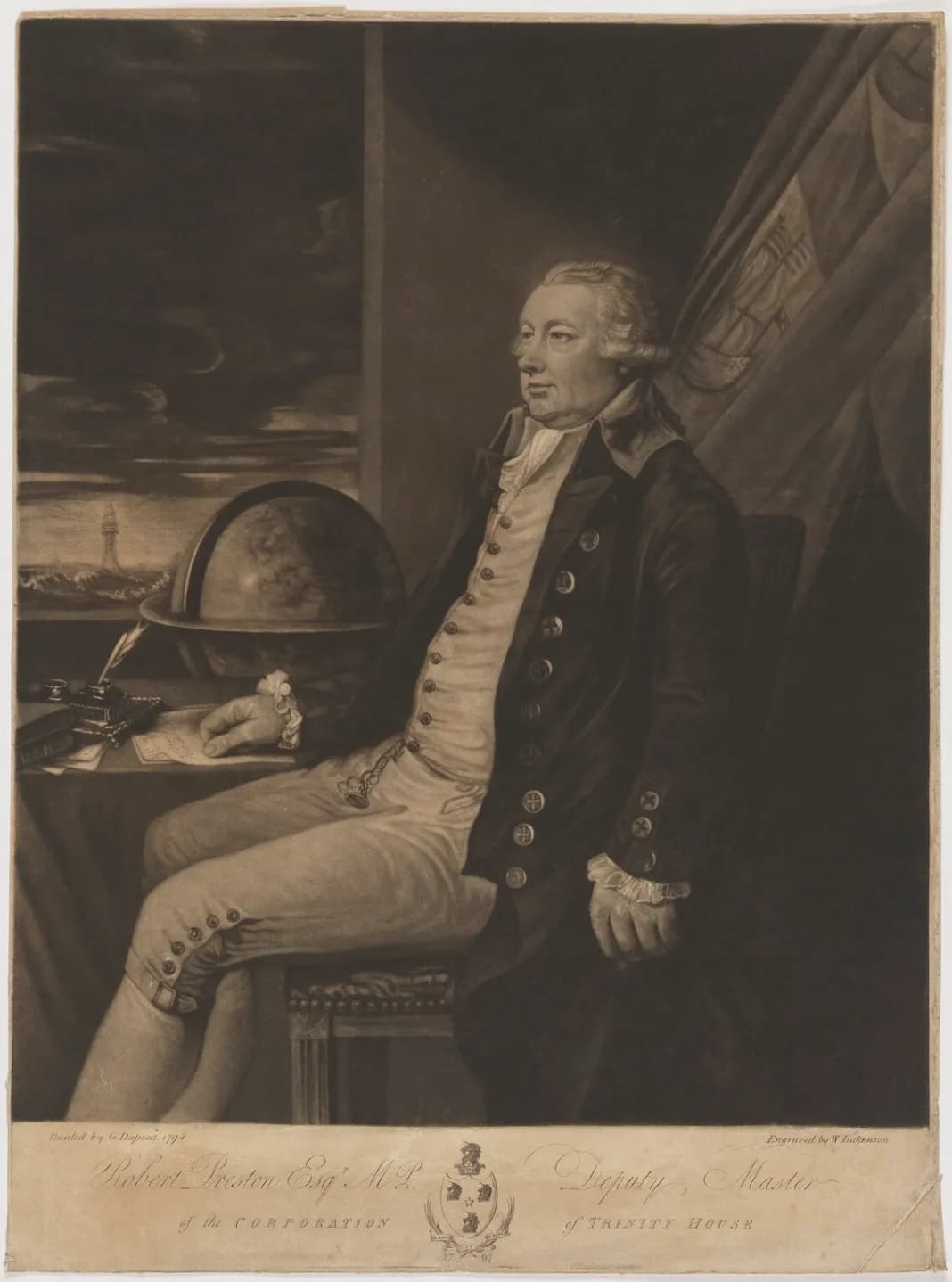
The story begins with Sir Robert Preston, 6th Baronet (1740–1834), a Scottish merchant and Member of Parliament who owned a fishing cottage on the banks of Dagenham Lake, also known as Dagenham Reach. According to historical accounts from Old and New London, Preston retired from his Parliamentary and mercantile duties to this modest cottage, where he entertained a close circle of friends.
Among those friends was George Rose (1744–1818), Secretary to the Treasury from 1783 to 1801 and MP for Christchurch. Rose was also a close confidant of William Pitt the Younger, who served as Prime Minister from 1783 to 1801 and again from 1804 to 1806. When Rose invited Pitt to join the gatherings at Dagenham, the character of the dinner changed forever.
From Private Supper to Cabinet Institution
What began as an intimate gathering of three men—Preston, Rose, and Pitt—gradually expanded into something far more significant. Lord Camden was permitted to accompany Pitt, and Charles Long (later Lord Farnborough) became the fifth regular guest. Over time, the dinner evolved from a private social occasion into what one historical source described as an "obligatory ritual of government."
The timing of the dinner was fixed to the Parliamentary calendar. It was held annually every spring, usually on or around Trinity Sunday and shortly after Trinity Monday, marking the approach of the session's end. The dinner became known as the "Ministerial Fish Dinner," serving as an annual festival that signalled the impending prorogation of Parliament.
Contemporary reports suggest the atmosphere was convivial. The participants were, according to one account, "all two if not three-bottle men"—a reference to the considerable quantities of wine consumed. Sir Robert Preston, despite his guests contributing to the costs, insisted on providing "a buck and champagne" himself.
The Menu: From Humble to Lavish
The original dinners at Dagenham were described as "simple but hearty meals based on whitebait and local Essex ale." However, as the event grew in prominence and attendance, so did the menu. By the early nineteenth century, the table included turtle, grouse, champagne, and a range of other luxury foods and drink.
Historical sources note that whitebait was not mentioned in the original Dagenham dinners; it was introduced only after the event moved to Greenwich. The original Dagenham gatherings featured locally caught fish from the Thames and the lake itself.
The Move to Greenwich
The tradition continued at Dagenham until Pitt's death in 1806. Charles Long then took over the organisation, and the dinner persisted as an annual event. However, the journey from Westminster to Dagenham became increasingly burdensome as the Cabinet grew.
As recorded in Old and New London, "the distance was considerable; the going and coming were somewhat inconvenient for the First Minister of the Crown." Eventually, the dinner moved from Dagenham to Greenwich, where it continued for many more years.
By 1835, the scale of the event had grown substantially. The Morning Post reported on 10 September that year: "Yesterday, the Cabinet Ministers went down the river... to partake of their annual fish dinner. Covers were laid for thirty-five gentlemen." What had begun as a supper for three had become a banquet for the entire government.
Connection to the Dagenham Breach
The whitebait dinners are connected to an earlier chapter of Dagenham's history. Some accounts suggest the custom originated around 1714–1720 to celebrate the closure of the Dagenham Breach—a catastrophic failure of the Thames seawall in 1707 that flooded over 1,000 acres of land. The breach, which saw fourteen feet of embankment swept away, cost more than £40,000 to repair.
The tradition allegedly began as a celebration of the security of the Thames and the successful closure of the breach. Whether this origin story is accurate remains a matter of historical debate. The British History Online account attributes the dinner's origin solely to Sir Robert Preston's hospitality, whilst Wikipedia suggests the Commission of Works may have established the custom to commemorate the breach's closure.
Dagenham's Forgotten Political Significance
Today, Dagenham is known for its industrial heritage, particularly the Ford motor works that dominated the area throughout the twentieth century. Yet before the factories, before the estate housing, and before the docks, Dagenham was the place where the entire British government dined together annually.
The Thames-side parish, with its fishing connections and its lake renowned for whitebait, provided the setting for conversations that shaped national policy. The journey downriver from Westminster was itself a symbol of the Thames's role as the artery of British political life.
The fishing cottage on Dagenham Lake has long since vanished, but the story of the whitebait Cabinet dinners remains a remarkable chapter in local history. For a brief period, a corner of Essex hosted the most powerful men in the nation, establishing a tradition that continued in different form for more than a century.