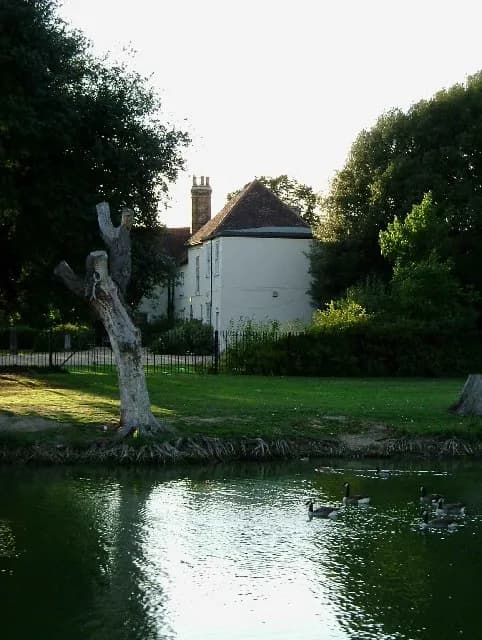
Valence House stands as the sole survivor of Dagenham's five manor houses, its timber-framed structure and partial moat bearing witness to more than eight centuries of continuous habitation on the same site.
From Medieval Origins to the Present Day
The estate first appears in records in 1280, when Robert Dynes owned the property. The house takes its name from Agnes de Valence and her brother Aylmer, Earl of Pembroke, who held the estate during the 14th century. The family belonged to a wealthy French noble house with strong connections to the English crown.
A defining feature of the property, the moat, was constructed around 1300. Originally encircling the house on all four sides, the waterway served a practical purpose rather than a defensive one. Historical records indicate the moat was built to manage livestock and to breed fish, ducks, and geese for the table. Sections of the north moat survive from this medieval construction.
The estate passed to the Dean and Chapter of Windsor in 1475, remaining in ecclesiastical hands until 1867, when it transferred to the Church Commissioners.
The Fanshawe Dynasty
Among the house's most notable residents were members of the Fanshawe family. Timothy Lucye owned or tenanted the property during the latter part of the 16th century. He married Susanna, daughter of Henry Fanshawe, in 1584, linking the estate to a dynasty that would serve the Crown for generations.
Henry Fanshawe received appointment as Remembrancer to the Crown from Queen Elizabeth I in 1566. Nine successive members of the family held this position, creating an unbroken line of Crown service spanning centuries. The house now holds a portrait of Sir Richard Fanshawe, 1st Baronet, a diplomat who served the Crown. The Fanshawe collection at Valence House has been described as one of the finest collections of gentry portraits in Britain, holding international significance.
A Role in Shaping Modern Dagenham
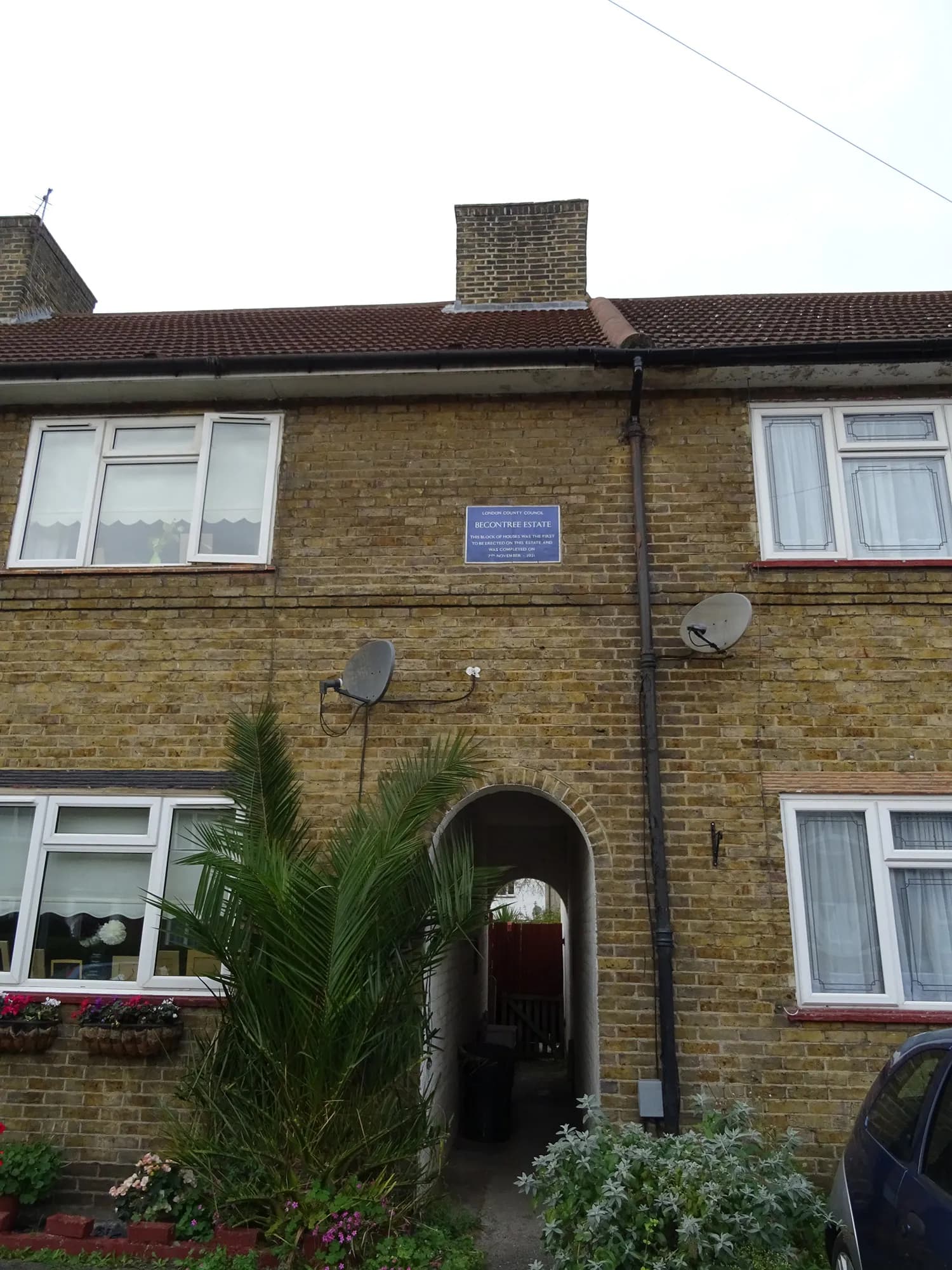
The London County Council purchased Valence House and its surrounding land in 1921 as part of the development of the Becontree Estate, then the world's largest council housing project. The house served as LCC headquarters during the construction phase from 1921 to 1935. Dagenham Urban District Council acquired the premises and extended the building between 1928 and 1929 to create offices and a council chamber.
The house functioned as Dagenham's town hall until 1937, when the new Civic Centre opened. It subsequently became headquarters for the borough's library service.
Museum and Archives
Valence House opened as a museum and art gallery in 1936, with the building becoming headquarters for Dagenham Library Service in 1938. The Grade II* listed building, first designated on 28 June 1954, closed on 22 December 2007 for extensive refurbishment funded by the Heritage Lottery Fund. It reopened in June 2010, now housing the Borough Archives and Local Studies Library in a purpose-built facility alongside the historic structure.
Today the museum presents permanent exhibitions on the history and life in Barking and Dagenham, including displays exploring the development of the Becontree Estate from 1945. The Fanshawe family portraits and archives remain on display for public viewing.
The Surrounding Estate
Valence Park extends across 27.82 acres, purchased by Dagenham Urban District Council from the London County Council in 1926. Within the grounds stands a Holm Oak estimated at over 350 years old, making it one of London's oldest trees and earning it recognition as one of the Great Trees of London.
Preserving the Past
Work began in February 2026 on a project to repair and restore the historic moat, funded by the National Lottery Heritage Fund. The restoration aims to preserve this rare surviving example of medieval water management while enhancing the setting of the 800-year-old manor house.
Valence House remains open to visitors at Valence Park, off Becontree Avenue, Becontree, offering Dagenham residents and visitors a tangible connection to the area's medieval past amid the modern borough.